በኢትዮጵያ የፀረ አገዛዝ ህዝባዊ ተቃውሞዎች ዳግም ተቀሰቀሱ
በኢትዮጵያ 2010 አዲስ ዓመት ህዝባዊ ተቃውሞዎች ዳግም ተቀሰቀሰ። በተለይ በኦሮሚያ ክልል በተለያዩ ከተሞች በገዥው መንግሥት ላይ ዳግም ህዝባዊ ተቃውሞች ተጠናክረው መቀጠላቸውን ተከትሎ የመንግሥት የፀጥታ ኃይሎች በወሰዱት ወታደራዊ የኃይል ርምጃ 8 ያህል ሰዎች መገደላቸውን መረጃዎች አመልክተዋል።
ባለፈው ህዳር 2008 ዓ. ም. ጀምሮ ክዓመት በላይ የዘለቀው የኦሮሚያ፥ አማራ እና ደቡብ ክልል በተለይም ኮንሶ አካባቢ የተከሰተውን ህዝባዊ የፀረ አገዛዝ ተቃውሞ ተከትሎ ሀገሪቱ ለ10 ወራት በአስቸኳይ ጊዜ አዋጅ ስር እንደነበረች ይታወሳል። ይሁን እንጂ በአስችኳይ አዋጁ ጊዜ ህዝባዊ አመፁ የተረጋጋ ቢመስልም በያዝነው ጥቅምት 2010 ዓ .ም. ዳግም ማገርሸቱ ታውቋል።
የህዝቡ ተቃውሞ ዋነኛ ምክንያት ተደርጎ የተጠቀሰውም ባለፈው መስከረም 2010 ዓ ም በኦሮሚያ እና በኦጋዴን የኢትዮጵያ ሶማሌ ክልል ድንበር አካባቢ በተቀሰቀሰ ግጭት በርካታ ሰላማዊ ዜጎች መገደላችውን እና በኦጋዴን የኢትዮጵያ ሶማሌ ክልል አስተዳደርና በክልሉ ልዩ ኃይል ፖሊስ አማካኝነት ከ70,000 በላይ ዜጎች ከሚኖሩበት ቀዬ መፈናቀላቸውን በመቃወም እንዲሁም የታአሰሩ የህሊና እና የፖለቲካ እስረኞች ይፈቱ የሚል ጥያቄም እንደነበር ለማወቅ ተችሏል።
በተለይ ባለፈው መስከረም 2010 ዓ ም በሁለቱ ክልሎች ድንበር አካባቢ በተቀሰቀሰ ግጭት ከሁለትም ክልል በርካታ ንፁሃን ዜጎች መገደላቸው ይታወሳል።
ይህ ዘገባ እስከተጠናቀረበት ድረስም በተለይ በኦሮሚያ ክልል ባሉ አንዳንድ ከተሞች ህዝባዊ ተቃውሞች መቀጠላቸውን ምንጮች አረጋግጠዋል።
Ethiopia’s ethnic federalism is being tested
Violence between ethnic groups has put the country on edge
FOR centuries the city of Harar, on the eastern fringes of the Ethiopian highlands, was a sanctuary, its people protected by a great wall that surrounded the entire city. But in the late 19th century it was finally annexed by the Ethiopian empire. Harar regained a bit of independence in 1995, when the area around it became the smallest of Ethiopia’s nine ethnically based, semi-autonomous regions. Today it is relatively peaceful and prosperous—and, since last month, a sanctuary once more.
In recent weeks thousands of Ethiopians have poured into areas around Harar, fleeing violence in neighbouring towns (see map). Nearly 70,000 people have sought shelter just east of the city. Several thousand more are huddling in a makeshift camp in the west. Most are Oromo, Ethiopia’s largest ethnic group. Its members clashed with ethnic Somalis in February and March, resulting in the death of hundreds. The violence erupted again in September, when more than 30 people were killed in the town of Awaday. Revenge killings, often by local militias or police, have followed, pushing the death toll still higher. In response, the government has sent in the army.

Ethnic violence is common in Ethiopia, especially between Oromos and Somalis, whose vast regions share the country’s longest internal border. Since the introduction of ethnic federalism in 1995, both groups have tried to grab land and resources from each other, often with the backing of local politicians. A referendum in 2004 that was meant to define the border failed to settle the matter. A peace agreement signed by the two regional presidents in April was no more successful.
When the ruling Ethiopian People’s Revolutionary Democratic Front (EPRDF) swept to power in 1991 after a bloody 15-year civil war, federalism was seen as a way to placate the ethnic liberation movements that helped it to power. The previous regime had been dominated by the Amhara, the second-largest ethnic group (the Eritreans broke away to form a new state). Eventually ethnic loyalties would wither as people grew richer, went the thinking of the Marxist-inspired EPRDF.
But the way federalism was implemented caused problems from the start.New identity cards forced people to choose an ethnicity, though many Ethiopians are of mixed heritage. Territories often made little sense. In the Harari region, a minority of Hararis rule over much bigger populations of Oromos and Amharas, a source of resentment. Boundaries that were once porous became fixed, leading to disputes.
For years the EPRDF sought to dampen the tension by tightly controlling regional politics. But its grip has loosened over time. Local governments have grown stronger. Regional politicians are increasingly pushing ethnic agendas. The leaders of Oromia, the largest region, have drafted a bill demanding changes to the name, administration and official language of Addis Ababa, the capital, which has a special status but sits within Oromia. They have stoked ethnic nationalism and accused other groups of conspiring to oppress the Oromo.
Politicians in the Somali region are no more constructive. They have turned a blind eye to abuses by local militias and a controversial paramilitary group known as the Liyu. The region’s president “has a fairly consistent expansionist agenda”, says a Western diplomat. “He may have spied an opportunity.” The federal government, now dominated by the Tigrayan ethnic group, was rocked by a wave of protests last year by the Oromo and other frustrated groups.
Many complain that the rulers in Addis Ababa are doing too little. They have been slow to respond to the recent violence, fuelling suspicions that they were complicit. “We are victims of the federal government,” shouts Mustafa Muhammad Yusuf, an Oromo elder sheltering in Harar. “Why doesn’t it solve this problem?”
Federalism may have seemed the only option when it was introduced in 1995. But some now suggest softening its ethnic aspect. “In the past the emphasis was too much on ethnic diversity at the expense of unity,” says Christophe Van der Beken, a professor at the Ethiopian Civil Service University. “The challenge now is to bring the latter back.”
Source: The Economist.
How The NSA Built a Secrete Surveillance Network for Ethiopia
Nick Turse
“A WARM FRIENDSHIP connects the Ethiopian and American people,” U.S. Secretary of State Rex Tillerson announced earlier this year. “We remain committed to working with Ethiopia to foster liberty, democracy, economic growth, protection of human rights, and the rule of law.”
Indeed, the website for the U.S. Embassy in Ethiopia is marked by press releases touting U.S. aid for farmers and support for public health infrastructure in that East African nation. “Ethiopia remains among the most effective development partners, particularly in the areas of health care, education, and food security,” says the State Department.
Behind the scenes, however, Ethiopia and the U.S. are bound together by long-standing relationships built on far more than dairy processing equipment or health centers to treat people with HIV. Fifteen years ago, the U.S. began setting up very different centers, filled with technology that is not normally associated with the protection of human rights.
In the aftermath of 9/11, according to classified U.S. documents published Wednesday by The Intercept, the National Security Agency forged a relationship with the Ethiopian government that has expanded exponentially over the years. What began as one small facility soon grew into a network of clandestine eavesdropping outposts designed to listen in on the communications of Ethiopians and their neighbors across the Horn of Africa in the name of counterterrorism.
In exchange for local knowledge and an advantageous location, the NSA provided the East African nation with technology and training integral to electronic surveillance. “Ethiopia’s position provides the partnership unique access to the targets,” a commander of the U.S. spying operation wrote in a classified 2005 report. (The report is one of 294 internal NSA newsletters released today by The Intercept.)
The NSA’s collaboration with Ethiopia is high risk, placing the agency in controversial territory. For more than a decade, Ethiopia has been engaged in a fight against Islamist militant groups, such as Al Qaeda and Shabab. But the country’s security forces have taken a draconian approach to countering the threat posed by jihadis and stand accused of routinely torturing suspects and abusing terrorism powers to target political dissidents.
“The Ethiopian government uses surveillance not only to fight terrorism and crime, but as a key tactic in its abusive efforts to silence dissenting voices in-country,” says Felix Horne, a senior researcher for Human Rights Watch. “Essentially anyone that opposes or expresses dissent against the government is considered to be an ‘anti-peace element’ or a ‘terrorist.’”
The NSA declined to comment for this story.
In February 2002, the NSA set up the Deployed Signals Intelligence Operations Center – also known as “Lion’s Pride” – in Ethiopia’s capital, Addis Ababa, according to secret documents obtained by The Intercept from the whistleblower Edward Snowden. It began as a modest counterterrorism effort involving around 12 Ethiopians performing a single mission at 12 workstations. But by 2005, the operation had evolved into eight U.S. military personnel and 103 Ethiopians, working at “46 multifunctional workstations,” eavesdropping on communications in Somalia, Sudan, and Yemen. By then, the outpost in Addis Ababa had already been joined by “three Lion’s Pride Remote Sites,” including one located in the town of Gondar, in northwestern Ethiopia.
“[The] NSA has an advantage when dealing with the Global War on Terrorism in the Horn of Africa,” reads an NSA document authored in 2005 by Katie Pierce, who was then the officer-in-charge of Lion’s Pride and the commander of the agency’s Signal Exploitation Detachment. “The benefit of this relationship is that the Ethiopians provide the location and linguists and we provide the technology and training,” she wrote. According to Pierce, Lion’s Pride had already produced almost 7,700 transcripts and more than 900 reports based on its regional spying effort.
Pierce, now a lieutenant colonel in the Army Reserve and a lawyer in private practice, had noted her role with the NSA’s Ethiopia unit in an online biography. When contacted by The Intercept, she said little about her time with Lion’s Pride or the work of the NSA detachment. “We provided a sort of security for that region,” she said. The reference to the NSA in Pierce’s online biography has since disappeared.
Reta Alemu Nega, the minister of political affairs at the Ethiopian Embassy in Washington, D.C., told The Intercept that the U.S. and Ethiopia maintained “very close cooperation” on issues related to intelligence and counterterrorism. While he did not address questions about Lion’s Pride, Alemu described regular meetings in which U.S. and Ethiopian defense officials “exchange views” about their partnership and shared activities.
Lion’s Pride does not represent the first time that Ethiopia has played a vital role in U.S. signals surveillance. In 1953, the U.S. signed a 25-year agreement for a base at Kagnew Station in Asmara, Ethiopia (now the capital of Eritrea), according to a declassified NSA report obtained by the nonprofit National Security Archive. Navy and Army communications facilities based there were joined by an NSA outpost just over a decade later.
On April 23, 1965, the Soviet Union launched Molniya-1, its first international communications satellite. The next month, the NSA opened STONEHOUSE, a remote listening post in Asmara. The facility was originally aimed at Soviet deep space probes but, in the end, “[its] main value turned out to be the collection of Soviet MOLNIYA communications satellites,” according to a 2004 NSA document that mentions STONEHOUSE.
STONEHOUSE was closed down in 1975 due to a civil war in Ethiopia. But its modern-day successor, Lion’s Pride, has proved to be “such a lucrative source for SIGINT reports” that a new facility was built in the town of Dire Dawa in early 2006, according to a secret NSA document. “The state of the art antenna field surrounded by camels and donkey-drawn carts is a sight to behold,” reads the NSA file. The effort, code-named “LADON,” was aimed at listening in on communications across a larger swath of Somalia, down to the capital Mogadishu, the Darfur region of Sudan, and parts of eastern Ethiopia.
At a May 2006 planning conference, the Americans and Ethiopians decided on steps to “take the partnership to a new level” through an expanded mission that stretched beyond strictly counterterrorism. Targeting eastern Ethiopia’s Ogaden region and the nearby Somali borderlands, the allied eavesdroppers agreed on a mission of listening in on cordless phones in order to identify not only “suspected al-Qa’ida sympathizers” but also “illicit smugglers.”
“It is very troubling to hear the U.S. is providing surveillance capacities to a government that is committing such egregious human rights abuses in that region.”
From the time Lion’s Pride was set up until predominantly Christian Ethiopia invaded mostly Muslim Somalia in December 2006, the U.S. poured about $20 million in military aid into the former country. As Ethiopian troops attempted to oust a fundamentalist movement called the Council of Islamic Courts, which had defeated several warlords to take power in Somalia, Pentagon spokesperson Lt. Cmdr. Joe Carpenter said the two nations had “a close working relationship” that included sharing intelligence. Within a year, Ethiopian forces were stuck in a military quagmire in Somalia and were facing a growing rebellion in the Ogaden region as well.
“While the exact nature of U.S. support for Ethiopian surveillance efforts in the Ogaden region is not clear, it is very troubling to hear the U.S. is providing surveillance capacities to a government that is committing such egregious human rights abuses in that region,” says Horne, the Human Rights Watch researcher. “Between 2007-2008 the Ethiopian army committed possible war crimes and crimes against humanity against civilians in this region during its conflict with the Ogaden National Liberation Front.”
For the U.S., “the chaos” caused by the invasion “yielded opportunities for progress in the war on terrorism,” stated a top secret NSA document dated February 2007. According to the document, the Council of Islamic Courts was harboring members of an Al Qaeda cell that the NSA’s African Threat Branch had been tracking since 2003. After being flushed from hiding by the Ethiopian invasion, the NSA provided “24-hour support to CIA and U.S. military units in the Horn of Africa,” utilizing various surveillance programs to track Council of Islamic Courts leaders and their Al Qaeda allies. “Intelligence,” says the document, “was also shared with the Ethiopian SIGINT partner to enable their troops to track High Value Individuals.” The NSA deemed the effort a success as the “#1 individual on the list” was “believed killed in early January” 2007, while another target was arrested in Kenya the next month. The identities of the people killed and captured, as well as those responsible, are absent from the document.
As the Council of Islamic Courts crumbled in the face of the invasion, its ally, the militant group Shabab, saw Somalis flock to its resistance effort. Fueled and radicalized by the same chaos exploited by the NSA, Shabab grew in strength. By 2012, the terrorist group had formally become an Al Qaeda affiliate. Today, the U.S. continues to battle Shabab in an escalating conflict in Somalia that shows no sign of abating.
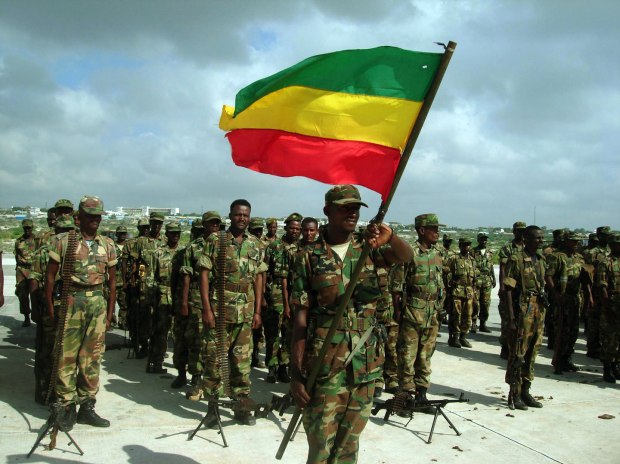
The first batch of Ethiopian troops leaving the Somali capital Mogadishu hold a departure ceremony Jan. 23, 2007 at Afisiyooni Air Base. Photo: Stringer/AFP/Getty Images
At the time the NSA set up Lion’s Pride, the U.S. State Department had criticized Ethiopia’s security forces for having “infringed on citizens’ privacy rights,” ignoring the law regarding search warrants, beating detainees, and conducting extrajudicial killings. By 2005, with Lion’s Pride markedly expanded, nothing had changed. The State Department found:
The Government’s human rights record remained poor. … Security forces committed a number of unlawful killings, including alleged political killings, and beat, tortured, and mistreated detainees. … The Government infringed on citizens’ privacy rights, and the law regarding search warrants was often ignored. The Government restricted freedom of the press. … The Government at times restricted freedom of assembly, particularly for members of opposition political parties; security forces at times used excessive force to disperse demonstrations. The Government limited freedom of association. …
A separate State Department report on Ethiopia’s counterterrorism and anti-terrorism capabilities, issued in November 2013 and obtained by The Intercept via the Freedom of Information Act, noted that there were “inconsistent efforts to institutionalize” anti-terrorism training within Ethiopian law enforcement and added that while the Ethiopian Federal Police use surveillance and informants, “laws do not allow the interception of telephone or electronic communications.” The readable sections of the redacted report make no mention of the NSA program and state that the U.S. “maintains an important but distant security relationship with Ethiopia.”
A 2010 NSA document offers a far different picture of the bond between the security agencies of the two countries, noting that the “NSA-Ethiopian SIGINT relationship continues to thrive.”
In an after-action report, a trainer from NSA Georgia’s “Sudan/Horn of Africa Division” described teaching a class attended by soldiers from the Ethiopian National Defense Forces and civilians from Ethiopia’s Information Network Security Agency. He praised the Ethiopians for “work[ing] so hard on our behalf” and wrote that his students were “excited and eager to learn.”
According to the documents, analysts from the Army’s 741st Military Intelligence Battalion were still detailed to Lion’s Pride while the Ethiopians they worked beside had increased their skills at analyzing intercepted communications. “More importantly, however,” the American trainer noted, “is the strengthening of the relationship” between NSA and Ethiopian security forces. NSA Georgia, he declared, was eager to continue “developing the relationship between us and our Ethiopian counterparts.”
The NSA refused to comment on whether Lion’s Pride continues to eavesdrop on the region, but no evidence suggests it was ever shut down. There is, however, good reason to believe that U.S. efforts have strengthened the hand of the Ethiopian government. And a decade and a half after it was launched, Ethiopia’s human rights record remains as dismal as ever.
“Governments that provide Ethiopia with surveillance capabilities that are being used to suppress lawful expressions of dissent risk complicity in abuses,” says Horne. “The United States should come clean about its role in surveillance in the Horn of Africa and should have policies in place to ensure Ethiopia is not using information gleaned from surveillance to crack down on legitimate expressions of dissent inside Ethiopia.”
Source: The Intercept.
The Long Arm of Ethiopia Reaches for Those Who Fled
By Felix Horne
Ethiopia’s Refugees Unsafe in Kenya and Elsewhere
“Wako” fled Ethiopia for Kenya in 2012, after his release from prison. He had been locked up for two years after campaigning for the Oromo People’s Congress, an opposition party that has often been targeted by the government.
In Kenya, he hoped to be safe. But six months later Ethiopian officials kidnapped him in Nairobi and brought him to Ethiopia’s notorious Ziway prison, where he was mistreated and tortured, before being released. He fled to Kenya a second time.
When I spoke to him in Kenya, he said he planned to travel overland to South Africa. He hoped for better safety there.
Human Rights Watch has documented numerous cases of harassment and threats against Ethiopian asylum seekers in Kenya and elsewhere since 2010. In a recent letter to the Kenyan police, to which they have not responded, we describe how asylum seekers were assaulted, detained, and interrogated before Ethiopian officials in Nairobi, and forced to return to Ethiopia. Many also received threatening phone calls and text messages from Kenyan and Ethiopian phone numbers.
In private, some Kenyan police told us that Ethiopian Embassy officials in Nairobi have offered them cash to arrest Ethiopians. Ethiopian refugees said Ethiopian officials tried to recruit them to inform on others, promising land, protection, money, and resettlement to the US or elsewhere.
Threats to fleeing Ethiopians are not limited to Kenya. Community leaders, social media activists, opposition politicians, and refugee protection workers have been harassed in other countries. Human Rights Watch has documented abductions of Ethiopian refugees and asylum seekers from Uganda, Sudan, Djibouti, and elsewhere.
High-profile opposition figures with foreign citizenship have also been handed to Ethiopian authorities without a legal process, including a British citizen detained in Yemen, a Norwegian citizen in South Sudan, and a Somali national handed over last month by Somalia’s government.
In Somaliland, we recently spoke to 10 asylum seekers who were forced back to Ethiopia during one of the frequent roundups of Oromo in Somaliland. Eight said they were tortured upon their return to Ethiopia. Many described harassment from Ethiopian embassy officials and indifference from the UN refugee agency.
All this creates a climate of fear and mistrust amongst Ethiopian refugees, preventing them from living normal lives, going to working or even applying for asylum.
The UN refugee agency and host countries should work harder to ensure Ethiopians fleeing torture and persecution can safely access asylum processes and be safe from the long reach of Ethiopian officials.
https://www.hrw.org/news/2017/09/20/long-arm-ethiopia-reaches-those-who-fled
በርካቶችን ለሞት የዳረገው የኦሮሚያ – ሶማሌ ግጭት እስከ ትናንት አለመቆሙን መንግስት አስታውቋል
አለማየሁ አንበሴ

አቶ አብዲ መሐመድ፥ እቶ ካሳ ተክለብርሃን እና አቶ ለማ መገርሳ
በኦሮሚያ እና በሱማሌ ክልሎች መካከል የተፈጠረው ግጭት እንደቀድሞ የወሰን ጉዳይ እንዳልሆነ የተጠቆመ ሲሆን፣ ትክክለኛ መንስኤው እየተጣራ መሆኑን ያስታወቁት የመንግስት ኮሚኒኬሽን ጉዳዮች ሚኒስትር ዶ/ር ነገሪ ሌንጮ፤ ግጭቱ እስከ ትናንት አርብ ድረስ በተለያዩ ቀበሌዎች መቀጠሉንና በርካቶች ተገድለው፣ ከ20 ሺህ በላይ ዜጎች መፈናቀላቸውን አስታውቀዋል፡፡
ለበርካታ ቀናት በቀጠለ ግጭት፤ የሠው ሕይወት ጠፍቷል፣ ንብረት ወድሟል፣ ዜጎች ተፈናቅለዋል ያሉት ሚኒስትሩ፤ ግጭቱ በቅርቡ እንዲገታ ይደረጋል፤ የሃይማኖት አባቶች፣ የሃገር ሽማግሌዎችም በመሃል ገብተው የማረጋጋት ስራ ይሠራሉ ብለዋል፡፡
ጠቅላይ ሚኒስትር ሃይለ ማርያም ደሣለኝ፤ ከሁለቱ ክልል አመራሮች ጋር በግጭቱ ላይ በስልክ ውይይት ማድረጋቸውንና ግጭቱ እንዲቆም ማሣሠቢያ መስጠታቸውንም ሚኒስትሩ አስታውቀዋል፡፡
በአካባቢው ለግጭቱ መባባስና ለሠው ህይወት መጥፋት ምክንያት የሆኑ ለህግ እንዲቀርቡ ይደረጋል ያሉት ሚኒስትሩ፤ የመሳሪያ ትጥቅ የማስፈታት ስራም ይሰራል ብለዋል፡፡
የመከላከያ ሰራዊትና የፌደራል ፖሊስ በግጭቱ መሃል ገብቶ ለማረጋጋት ለምን ዘገየ ተብለው የተጠየቁት ሚኒስትሩ፤ ክልሎቹ ችግሮቹን በራሳቸው ይፈቱታል የሚል እምነት በመጣሉ ነው ብለዋል፡፡
በግጭቱ የሶማሊያ ሪፐብሊክ ኃይሎችና የሶማሌ ክልል ልዩ ኃይል መሳተፋቸው ተጣርቶ ህጋዊ እርምጃ ይወስዳል ብለዋል – ሚኒስትሩ፡፡ ግጭቱ በታጠቁ አካላት የታገዘ መሆኑን የጠቆሙት ሚኒስትሩ፤ እነዚህ የታጠቁ አካላት እነማን ናቸው የሚለው ግን እስካሁን ምላሽ አለማግኘቱንና በማጣራት ሂደቱ እንደሚታወቅ ተናግረዋል፡፡ ግጭቱ የህዝብ ለህዝብ አለመሆኑን ግን አስረግጠው በመግለፅ፡፡ ከዚሁ ጋር በተያያዘ የሁለቱ ክልሎች የመንግስት ኮሚኒኬሽን ኃላፊዎች ጉዳዩን አስመልክቶ በየሚዲያው የሚያስተላልፏቸው መግለጫዎች፣ ግጭቱን ሊያባብሱ የሚችሉ በመሆኑ ከእንግዲህ በኋላ ግጭት አባባሽ መግለጫዎችን ከመስጠት እንዲቆጠቡ ዶ/ር ነገሪ አሳስበዋል፡፡
የኮሚኒኬሽን ኃላፊዎቹ ከዚህ ድርጊታቸው የማይቆጠቡ ከሆነ፣ ህጋዊ እርምጃ እንደሚወሰድም ሚኒስትሩ ጠቁመው፤ በሁለቱም የሚገለፁ አሃዛዊ መረጃዎችንም ገና ያልተጣሩ መሆናቸውንና መንግስት ሁኔታውን አጣርቶ እንደሚገልፅ አስታውቀዋል፡፡
የሶማሌ ክልል ግጭቱን አስመልክቶ ለቪኦኤ በሰጠው መግለጫ፤ በአወዳይ ከተማ 50 ሠዎች መገደላቸውን ሲገልፅ፣ የኦሮሚያ ክልል በበኩሉ፤ በአወዳይ ከተማ 18 ሰዎች መገደላቸውን፣ ከነዚህ ውስጥ 12ቱ የሶማሌ ተወላጆች፣ ቀሪዎቹ የኦሮሞ ጃርሶ ጎሣ አባላት መሆናቸውን አስታውቋል፡፡
የኦሮሚያ ክልላዊ መንግስት ቃል አቀባይ አቶ አዲሱ አረጋ ትናንት ምሽት ባሰራጩት መረጃ፤በሰሞኑ ግጭት ከተፈናቀሉት ከ22ሺ በላይ ዜጎች በተጨማሪ አጠቃላይ የድንበር ግጭቱ ከተከሰተበት ከ2009 ጀምሮ 416ሺ807 ዜጎች መፈናቀላቸውን አስታውቀዋል፡፡
በአወዳይ የደረሠውን ግጭት ተከትሎ፣ ከሶማሌ ክልል ከ21 ሺህ በላይ ዜጎች ተፈናቅለው በጭናቅሠን፣ ባቢሌና ሐረር ከተሞች ተጠልለው እንደሚገኙ የኦሮሚያ ክልል ቃል አቀባይ አቶ አዲሱ አረጋንና ምንጮቹን ጠቅሶ ቪኦኤ ዘግቧል፡፡
የሱማሌ ክልል የመንግስት ኮሚኒኬሽን ሃላፊ አቶ ኢንድሪስ አህመድ በበኩላቸው፤ “ሰዎች ከአካባቢው የተፈናቀሉት በግዴታ ሳይሆን በፍቃዳቸው ነው፤ ጥቃት አልተፈፀመባቸውም” ብለዋል፡፡ ምንጮች በበኩላቸው፤ የግዳጅ ማፈናቀል መፈፀሙንና በዜጎች ላይ ድብደባና እንግልት እንደደረሰባቸው ለመገናኛ ብዙኃን ተናግረዋል፡፡
የሱማሌ ክልል መንግስት ኮሚኒኬሽን ሃላፊ አቶ ኢንድሪስ አህመድ፤ በአወዳይ ከተማ የደረሰውን ግድያ ተከትሎ ባስተላለፉት መግለጫ፣ የኦሮሚያ ክልል መንግስትን “የአሸባሪነት አላማ አራማጅ” በሚል የፈረጀ ሲሆን የኦሮሚያ ክልል ቃል አቀባይ በበኩላቸው፤ ፍረጃውን አጣጥለው፣ ከአንድ ክልልን ከሚያስተዳድር አካል የማይጠበቅ ነው ብለዋል፡፡
የሶማሌ ክልል መንግስት ኮሚኒኬሽን ሃላፊ ለቪኦኤ በሰጡት መረጃ፤ በአስራ አንድ የሶማሌ ወረዳዎች፣ ማንነታቸው ባልታወቀ አካላት በተሠነዘሩ ጥቃቶች፣ ከሁለት መቶ አስራ ሶስት ሰዎች በላይ ህይወት ማለፉን አስታውቀዋል፡፡ ይሄን ተከትሎም የሶማሌ ክልላዊ መንግስት፣ ለ5 ቀናት የሚቆይ ብሄራዊ የሃዘን ቀናት በክልሉ ማወጁንም ለማወቅ ተችሏል፡፡
ከዚሁ ጋር በተያያዘ ፣የኢትዮጵያ ሰብአዊ መብቶች ኮሚሽን የግጭቱን መነሻና የደረሰውን ጉዳት የሚያጣራ ቡድን ከትላንት በስቲያ ሐሙስ ወደ አካባቢው መላኩንና ማጣራት መጀመሩን የኮሚሽኑ የህዝብ ግንኙነት ኃላፊ አቶ ደምሰው በንቲ ለአዲስ አድማስ አስታውቀዋል፡፡
ሰሞኑን የሁለቱ ክልሎች የመንግስት ኮሙኒኬሽን ኃላፊዎች በማህበራዊ ድረ-ገፆቻቸው የሚያሰፍሯቸው የእርስ በርስ ውንጀላዎች አስደንጋጭና ግጭቱን የሚያባብሱ መሆናቸውን አስተያየት ሰጪዎች ይናገራሉ፡፡ ክልላዊ መንግስታቸውን ወክለው መልዕክት የሚለዋወጡ እንደማይመስሉና ኃላፊነት የጎደሏቸው እንደሆነም ተገልጿል፡፡
ምንጭ፡ አዲስ አድማስ
 Dagumedia