A Journalist kidnapped, Threatened, and Beaten by Intelligence and Security Agents in Ethiopia
By Betre Yacob
The Ethiopian journalist Bisrat Woldemichael was kidnapped, threatened, humiliated, and beaten by the Ethiopian intelligence and security agents on 28 August, 2013. He has reported this incident today to journalists.
Bisrat reported that the dreadful incident took place at Gotera, a place in the capital Addis Ababa as he was walking home from work. He said he was victimized for exercising his right to free expression in conjunction with the related right to press freedom.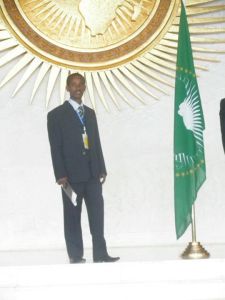
Bisrat Woldemichael works for a magazine, Ebony, as Editor in Chief, and writes political articles on different Ethiopian private press outlets. He also blogs at http://www.addismedia.wordpress.com and http://www.ethiopiahot.wordpress.com. The journalist is known for his outspoken articles focused on the poor governance and pervasive human right violation, which are turning the oldest East African nation, Ethiopia, into a hell.
Violence against journalists is a common practice in Ethiopia, a country generally regarded as one of the most dangerous places to be a journalist. According to Amnesty International, during the past three years only, over 100 prominent journalists were brutally prosecuted on fabricated charges, and too many others were also subjected to harassment, intimidation, and other violence.
“It was 3:30 AM in the evening, and I was returning home from my workplace. 4 people came to me and said: ‘we need to ask you some questions. Two of them were dressed in black and their faces were almost covered with their caps”, Bisrat said, while narrating his ordeal to journalists.
“I first didn’t understand what was going on. I realized that I was in danger just when one of them put a knife on my stomach”, he noted. “When I saw the knife, I asked them: ‘Who are you? What do you need? But none of them gave me an answer, instead they warned me just to keep walking forward,” he explained.
“I didn’t do anything but followed them, because I was surrounded, and the guy also clearly told me he would stab me with the knife if I tried to challenge them. In addition, one of them had a gun”, Bisrat said.
From there Bisrat was taken to a place far away from the main road. The place he was taken to was quite dark and out of public sight.
“As soon as we reached there they told me they were disappointed at my articles I had recently written, particularly at the one which dealt about the wealth of the late Prime Minister Meles Zenawi ”, Bisrat said.
“They said: ‘Who are you to count the wealth of Meles Zenawi? Who are you to write about his family’s wealth? You have passed the red line!’ ” he explained.
The journalist said that the kidnappers violently interrogated him at length, for almost one hour, and threatened him to stop writing.
“They said: ‘here we are giving you a last warning. If you write any more for any media (or if you keep blogging), the consequence will be worse for you. If you need your life, stop wiring. Remember! It is a last warning’ ”, Bisrat explained.
The journalist said that this was not the end of the drama but the beginning. “They also insulted and humiliated me, and finally began to beat me.
Right after the incident, Bisrat was able to go to a nearby police station, to report the case. But, according to him, having heard the case, the police officers simply gave him an appointment for the coming mooring and let him go. Bisrat said that it took him several days to get the case registered.
“They are Watching Me”
Bisrat Woldemichael Bisrat said since the day he experienced the violence he has been under surveillance. “Few days ago, I saw them following me behind”, he explained adding “I know they are watching me very closely.”
But, in the face of such grave threats, Bisrat, a journalist who is committed to freedom of speech, has continued doing his job with courage. He continues writing about the political crisis, poor governance, and human right violation worsening in Ethiopia.
“I don’t have a choice. I am a journalist. There is nothing to do except writing what I see, hear, and feel.” Bisrat explained. He again and again made clear that no threats and tortures would make him stop writing.
The paper Tigers
Article 19 of the Universal Declaration of Human Rights, guarantees the right to freedom of expression saying that: “Everyone has the right to freedom of opinion and expression; this right includes freedom to hold opinions without interference and to seek, receive and impart information and ideas through any media regardless of frontiers. Likewise, the International Covenant on Civil and Political Rights (ICCPR), which Ethiopia ratified in 1993, and the African Charter on Human and Peoples’ Rights guarantee the right in a very clear way. They even impose formal legal obligations on state parties to insure this fundamental right is protected.
But, sadly, even in the presence of all these legal documents, Enjoyment of press freedom and freedom of expression still continue to be a far cry for Ethiopian journalists and bloggers as they experience violence while doing their job. They are harassed, threatened, humiliated, and arbitrary jailed.
Imprisoned Ethiopian Journalist Wins the 2013 UNESCO-World Press Freedom Prize
By Betre Yacob
Imprisoned Ethiopian journalist Reeyot Alemu has won the 2013 UNESCO-Guillermo Cano World Press Freedom Prize. She is given the prize in recognition of her “exceptional courage, resistance and commitment” to freedom of expression. According to UNESCO’s news report, she was recommended by an independent international jury of 12 most outstanding media professionals.
Reeyot Alemu is one of the very rare outspoken Ethiopian women journalists. She bravely fought falsehoods, brutality, and oppression in Ethiopia, with pen — a power of words. She is currently serving a five-year jail sentence in Kality, a notoriously brutal prison of the authoritarian regime in Ethiopia. She was charged with ‘terrorism offences’ on June 2012, under the vaguely worded and broad-reaching Anti-Terrorism law, passed by the regime in 2009.
According to the Committee to Protect Journalists (CPJ), all of the charges against Reeyot Alemu were only based on her journalistic activities–emails she had received from pro-opposition discussion groups and reports and photographs she had sent to opposition news sites.
Reeyot Alemu is among a number of journalists who have been prosecuted under the anti-terrorism law in Ethiopia. According to Amnesty International, only during 2011 and 2012, over 100 journalists and political activists were arrested and prosecuted on charges of terrorism and other offenses in the country, for exercising their rights to freedom of expression. The actions that were the basis for such charges and prosecutions included writing articles critical of the government, calling for peaceful protest, and reporting on peaceful protests.
A Woman Born to Stand for the Truth
Born in 1980, Reeyot Alemu studied in Addis Ababa, the capital of Ethiopia. She received her BA in English Language and Theatrical Art from Addis Ababa University in 2005. Willing to risk her freedom and peace of mind, she began writing articles for independent newspapers in 2009, as a freelance writer.
Reeyot Alemu joined the now-defunct most prominent weekly newspaper called Awramba Times in 2010, where she worked as a columnist and wrote critically about the social and political crisis of her country. In 2011, she worked, among other roles, as a columnist for the weekly independent paper Feteh, which was later shuttered by the regime.
In 2010, Reeyot Alemu was able to found her own publishing house and a monthly magazine called “Change” that covered a wide range of political and social issues. However, after operating for a while, both of them were subsequently closed.
On June 21, 2011, Reeyot Alemu was taken from the school she taught, and arrested in Ma-ekelawi, an interrogation center, where dis-speakable torture is a normal practice of police and security officials in attempts to elicit confessions before cases go to trial. It was without charge. Four days before her arrest, she had written a sharp critique against the regime’s illegitimate fundraising methods for a dam project, and had apparently compared the late Libyan dictator Muammar Gaddafi with Ethiopia’s then-Prime Minister Meles Zenawi, who ruled the country for 21 years with a rod of iron.
Judged a “terrorist” by the tyrannical regime’s court, Reeyot Alemu was sentenced to 18 years in prison in January 2012. An appeals court, however, subsequently reduced the sentence to five years and dropped some of the charges.
Reeyot Alemu was offered clemency if she agreed to testify against journalist colleagues, who were arrested with her and accused by the regime of abetting terrorist groups. She, however, refused to do so and was consequently sent to solitary confinement as a punishment.
According to different sources, since her imprisonment in June 2011, the health of Reeyot Alemu has deteriorated. Recently, she has underwent surgery to remove a tumor from her breast. Her families reported that after the surgery she was forced to return to jail with no recovery time, and two days later she was, therefore, bleeding.
In 2012, Reeyot Alemu was the recipient of the prestigious 2012 Courage in Journalism Award that recognizes courageous actions of journalists around the world. She was given the prize for her “refusal to self-censor in a place where that practice is standard, and her unwillingness to apologize for truth-telling, even though contrition could win her freedom.”
Ethiopia’s Human Rights Crisis Worsened
By Betre Yacob.
The human rights situation in Ethiopia, the most important strategic and security ally of the Western powers, has worsened drastically, according to the 2013 Human Rights Watch’s World Report, which summarizes the human rights situation of more than 90 countries worldwide—drawing on events from the end of 2011 through November 2012.
The 665 page report says that Ethiopia’s dictatorial regime has deliberately continued to severely restrict fundamental rights of freedom of expression, association, and assembly. In addition, the report indicates that intimidation, arbitrary arrest, torture, forced displacement, and killing remain routine throughout the country.
The report, which reflects extensive investigative work that Human Rights Watch undertook in collaboration with local human rights activists, was released in the beginning of February 2013. Providing heartbreaking examples, cases, and photographs, the report explains enough how dramatically the human rights crisis in Ethiopia has been worsening.
“Freedom of Expression, Association, and Assembly”
According to the report, the Anti-Terrorism Law and the Charities and Societies Proclamation (CSO Law), which criminalize independent reporting on opposition and human rights activities, have severely restricted freedom of expression, assembly, and association in Ethiopia. The report says that as a result of these two draconian laws—independent journalists, opposition politicians, human rights activists have been subjected to persistent harassment, threats, intimidation and persecution by the government authorities.
The report explains: “Ethiopia’s most important human rights groups have been compelled to dramatically scale-down operations or remove human rights activities from their man-dates, and an unknown number of organizations have closed entirely. Several of the country’s most experienced and reputable human rights activists have fled the country due to threats.”
Mentioning the Committee to Protect Journalists (CPJ), the report says that Ethiopia has now become a very dangerous country for independent journalists. This is why, the report says, “more journalists have fled Ethiopia than any other country in the world due to threats and intimidation in the last decade.”
The report, which says the Anti-Terrorism Law is misused by the government to silence opponents and repress dissent, states that only in 2012 30 journalists, political activists, and opposition party members were convicted miserably on unclear terrorism offenses under the Law. According to the report, 11 journalists in total have been convicted under the same law— since 2011.
The report explains: “On January 26, 2012, a court in Addis Ababa sentenced both deputy editor Woubshet Taye and columnist Reeyot Alemu of the now-defunct weekly Awramaba Times to 14 years in prison. On July 13, veteran journalist and blogger Eskinder Nega, who won the prestigious PEN America Freedom to Write Award in April, was sentenced to 18 years in prison along with other journalists, opposition party members, and political activists. Exiled journalists Abiye Teklemariam and Mesfin Negash were sentenced to eight years each in absentia under a provision of the Anti-Terrorism Law that has so far only been used against journalists.”
It further says: “On July 20, after the government claimed that reports by the newspaper Feteh on Muslim protests and the prime minister’s health would endanger national security, it seized the entire print run of the paper. On August 24, Feteh’s editor, Temesghen Desalegn was arrested and denied bail. He was released on August 28, and all the charges were withdrawn pending further investigation.”
The report also reveals that the government of Ethiopia is committing human rights violations in response to the ongoing Muslim protest movement in the country. It says federal police use excessive force, including beatings, to disperse peaceful protesters.
With regard to this, the report, for instance, says: “On July 13, police forcibly entered the Awalia Mosque in Addis Ababa, smashing windows and firing tear gas inside the mosque. On July 21, they forcibly broke up a sit-in at the mosque. From July 19 to 21, dozens of people were rounded up and 17 prominent leaders were held without charge for over a week. Many of the detainees complained of mistreatment in detention.”
“Extrajudicial Executions, Torture and other Abuses in Detention”
The 665 page report says that there have been so far widespread extrajudicial executions, torture and other brutal abuses in different detention centers and military barracks of the tyrannical regime in Ethiopia. It notes that Human Rights Watch has continued to document such executions and abuses.
The report explains: “An Ethiopian government-backed paramilitary force known as the “Liyu Police”, for instance, executed at least 10 men who were in their custody and killed 9 other villagers in Somali Region on March 16 and 17 in Raqda village, Gashaamo district.”
It further says: “In April, unknown gunmen attacked a commercial farm owned by the Saudi Star company in Gambella that was close to areas that had suffered a high proportion of abuses during the villagization process. In responding to the attack, Ethiopian soldiers went house to house looking for suspected perpetrators and threatening villagers to disclose the whereabouts of the ‘rebels’. The military arbitrarily arrested many young men and committed torture, rape, and other abuses against scores of villagers while attempting to extract information.”
Additionally, the report states that there is what it says “erratic access” to legal counsel and insufficient respect for other due process during custody, pre-trial detention, and even during trial phases, when the cases are politically related. “This places detainees at risk of abuse”, the report says.
“Forced Displacement”
The report notes that although the government maintain that “villagization” is a voluntary program designed to improve access to basic services by bringing scattered people all together in new villages, the reality is that the program is involuntary and mainly designed to make way for huge agriculture investments.
The report explains: “In Gambella and in the South Omo Valley, forced displacement is taking place without adequate consultation and compensation. In Gambella, Human Rights Watch found that relocations were often forced and that villagers were being moved from fertile to unfertile areas. People sent to the new villages frequently have to clear the land and build their own huts under military supervision, while the promised services (schools, clinics, water pumps) often have not been put in place.”
According to the report, indigenous peoples, amount about 200,000, are being relocated in South Omo and their land expropriated to make way for sugar plantations. It says: “Residents reported being moved by force, seeing their grazing lands flooded or ploughed up, and their access to the Omo River, essential for their survival and way of life, curtailed.”
“Key International Actors”
The report, which finally examines the response of international actors to the human rights crisis in Ethiopia, strongly criticizes donors. It says that donor countries and development agencies are failed to take into account the deteriorating human right situation and the brutality of the regime, and act responsibly.
The report explains: “The World Bank, for instance, approved a new Country Partnership Strategy in September that takes little account of the human rights or good governance principles that it and other development agencies say are essential for sustainable development. It also approved a third phase of the Protection of Basic Services program (PBS III) without triggering safeguards on involuntary resettlement and indigenous peoples.”
Black terror on freedom of expression
Bisrat Woldemichael
addismediab@gmail.com
Among the desperate times faced by Ethiopians in the 1970s are the socialist divisions among the citizens as groups of ‘white terror and red terror.’ At that time, military rules suppressed ideas. For this reason, some parties are established to face against the army while others are subjected to life in refuge.
The Derg regime did not allow the freedom to expressions and suppressed the press freedom amid its demise by the EPLF & EPRDF forces in 1991. The Derg opponents of that time split in to two as Ethiopia & Eritrea and repeating the same system they used to oppose.
Particularly, after controlling the Menlik II palace in Addis Ababa, under the leadership of Mr.Meles Zenawie, the EPRDF disclosed the right to free expressions, press freedom, multiparty, freedom of organization for professionals and political parties. Proclamation 34/93 for press freedom in accordance with the constitution Article 29(3) A & B, the right for press freedom for multimedia and copyright provisions are being respected. The press freedom particularly encompasses the following press rights:-
A. Any form of censorship is prohibited
B. Clearly indication of getting information for public interest but the above rights slightly worked only until May 2005 during the election. The main reason that the free press disclosed the bad operations and oppression of the press rights by the government and played major roles in the election by motivating the public at large. After the election, some journalists were jailed and others were subjected to refuge.
Consequently, the CPJ, HRW and other reputable international media indicate that more than 140 free press and about 48 government multimedia Journalists are subjected to refuge.
In fact, even during that time, the number of free press and government media are not proportional to the need of the people. Notwithstanding to the gaps in capacity of some free press & government media professionals, the number of such institutions remains lacking ; for this reason, information supply is limited to some towns and cities.
Notwithstanding to the provisions of the constitution, the press freedom proclamation No. 590/2007 article 4/1/ that attest ‘The freedom of multimedia is accredited by the constitution. Censorship is prohibited in any way.’ In this proclamation Article 2 attests that “any limitations to multimedia shall be enforced based up only on the provisions of the constitution and the laws.’ The fact presently is far beyond this truth.
For instance, the government owned ‘Berhanena Selam Printing Enterprise’ officially violated the constitution and the proclamation and drafted a new ‘printing Agreement.’ In this draft article 10/1/ is written ‘The printing press, up on findings that the script supplied by the client violates the law, has the right to reject the printing order.’ This shows that the firm is ready to censor the script before it is printed and as a result the newspapers that officially disclose human rights violations, non democratic operations, issues of good governance and inappropriate actions by EPRDF will be forced to diminish and the public remains thirsty of such information. This encourages dictatorship and the need to remain on power.
The other article 10/2 of this draft attests that ‘If the printing press finds a content that brings legal accountability is intentionally submitted for printing, it can terminate or dissolve the agreement.’ Besides implementing censorship, it articulates the Journalist or the press ethics as if it is not legally accountable and therefore leading to a conclusion that journalism is not a disciplinary profession. The amazing thing here is that it contradicts with the constitution regardless of the article 9/1/ that states any law or regulation that contradicts the constitution shall be nullified. Not only due to the fact that the printing press belongs to the government but also under the leadership of the EPRDF higher officials that it intended to censor scripts.
The socialist partisan philosophy divided parties as ‘white terror’ and ‘red terror’ and now indirectly imposed on the free press because of censorship. The White terror and red terror are direct signs for bloodshed but censorship is indirect way of violation of freedom of consciousness and that’s why we called it Black Terror. Thus any threat to the natural rights of human beings shall be cursed.
The EPRDF led Ethiopian Government appears saying ‘The right to free expression and press freedom are constitutionally approved’ to win the hearts of donors and fooling citizens but kept contrary in action. Writing on papers cannot guarantee the right of citizens nor does it have more value than the paper it is printed on. Freedom shall be shown in action not only by papers. Therefore, suppressing the free press and censorship is a black terror to the freedom of expressions. In this case now a day’s two independent newspapers Feteh and Finote Netasnet are blocked from publishing without legal ground.
In general, suppressing the free press is not only violation of the law but also threatening dignified humanity.
 Dagumedia